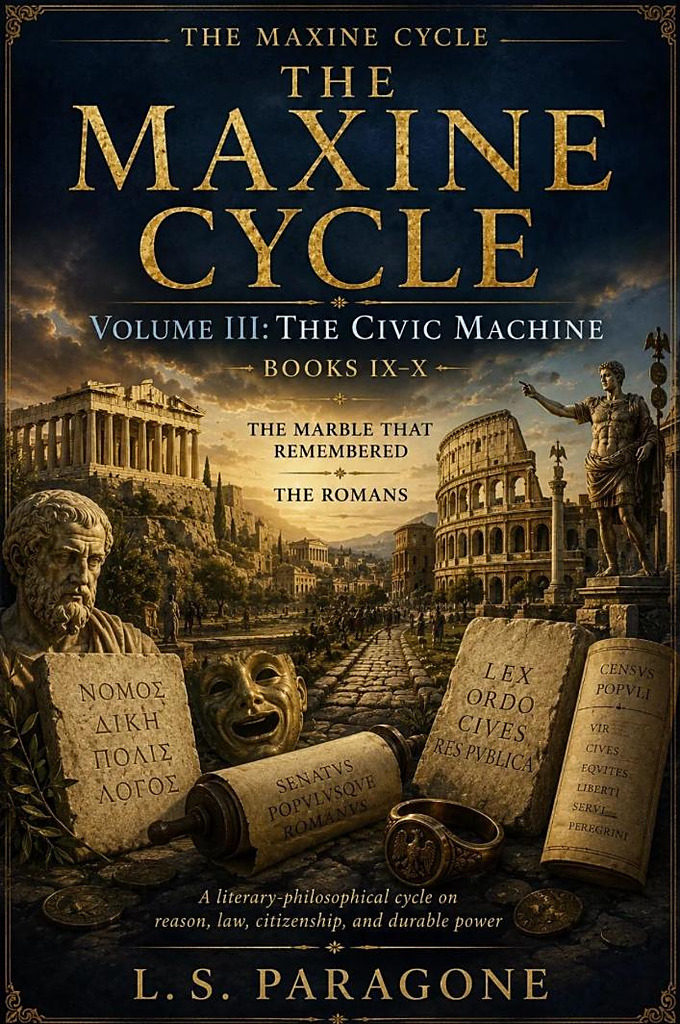
The Civic Machine enters Greece and Rome, where authority learns to speak through the square, court, theater, census, citizenship, and public reason. The Marble That Remembered and The Romans place law, slavery, republican language, spectacle, mercy, civic belonging, and imperial durability beside one another. Institutions become persuasive because they appear rational, public, and beautiful, even when the moral arguments that once justified them weaken or change.