Using Thomas Paine's Common Sense as a civic compass rather than a historical template, Book II follows citizens whose ordinary lives are narrowed by procedures no one fully explains. Samira keeps receipts because delayed payments become rent; families argue about enemies while platforms, primaries, recession, appeals, hearings, and managed hostility shape what can be believed and challenged. The book's central question is intimate as much as political: who is friend and who is enemy when the system itself can engineer the answer?
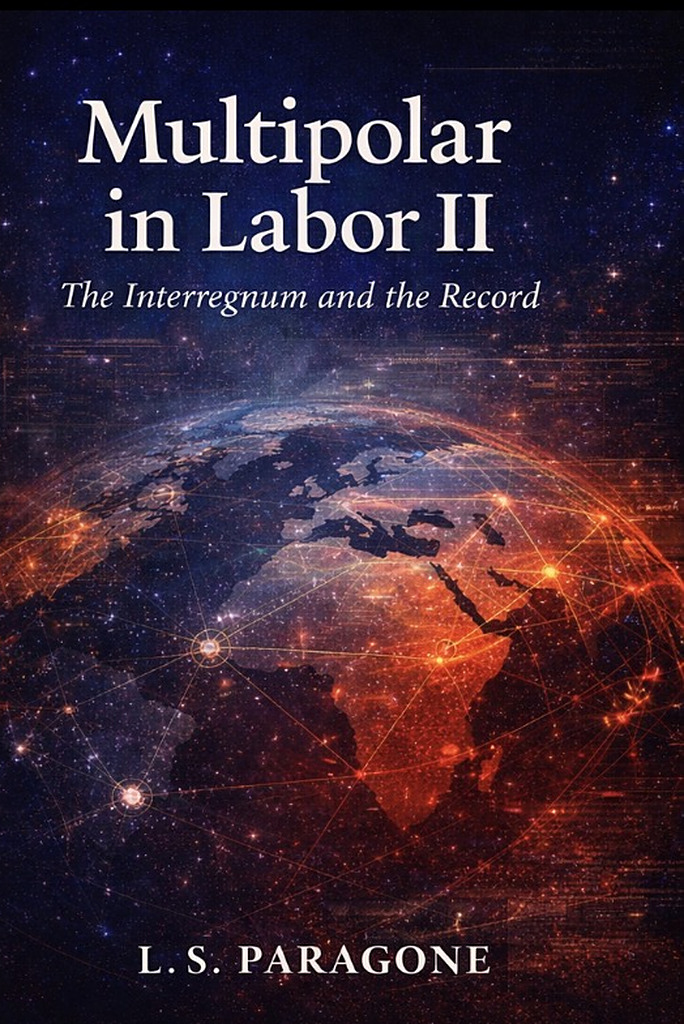
Multipolar in Labor
Volume II: The Interregnum and the Record
L. S. Paragone
14.99
Browse all 44 books →