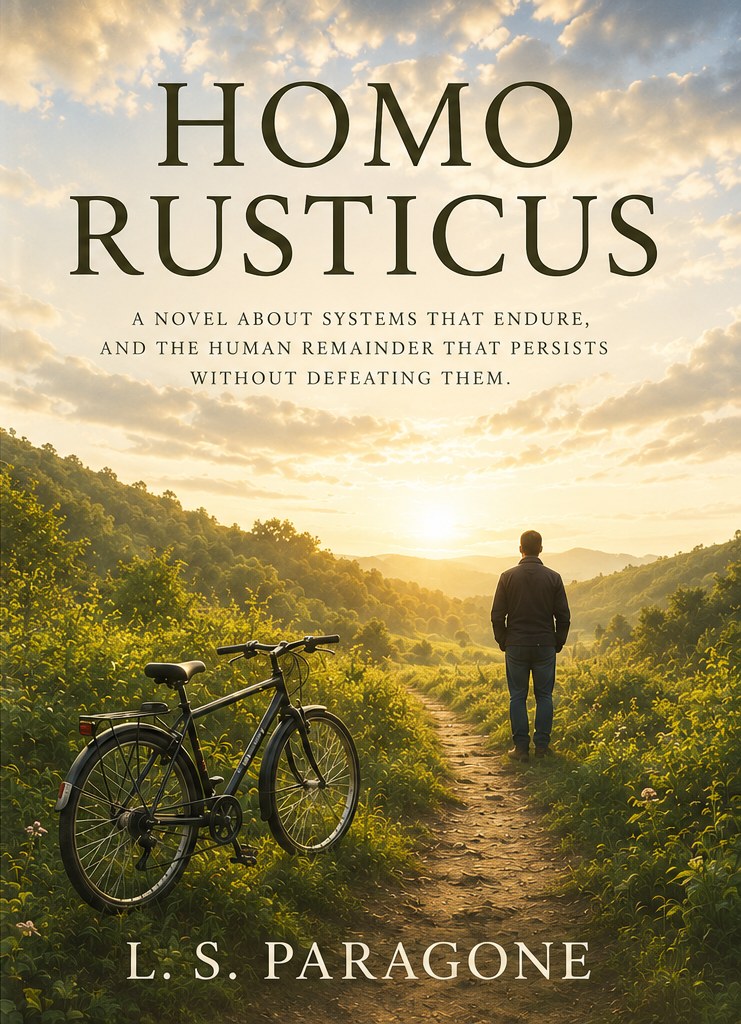
Homo Rusticus examines forms of practical human knowledge that remain only partly convertible into institutional categories. Land, work, family obligation, craft, repair, memory, debt, weathered documents, and inherited routines carry meanings that a clean record can recognize only imperfectly. The novel rejects both romantic retreat and heroic rebellion. Its pressure lies in what happens when systems can measure production, price property, and classify competence while failing to understand stewardship, accumulated judgment, and the moral memory embedded in ordinary work.